


服务
林妹妹有话说:当谈到中国,我们都患有近视病
When It Comes to China, We All Suffer From Myopia
Despite my experience as a community activist and a former school trustee candidate, the new level of drama in Chinese Canadian politics comes as a surprise to me. For the most part, we are a community of hard working, placid individuals, who typically shy away from politics.
尽管我是曾今教委候选人,对加拿大的政治体系熟门熟路, 在服务社区这么久,可是对我来说, 最近在中加政坛里, 上演的一场政治肥皂剧另我完全没想到。在大多数情况下,我们大部分华人是一群勤奋,平淡,通常远离政治的人。
However, this all changed when Chinese Foreign Minister Wang Yi berated iPolitics' reporter Amanda Connolly. Just to make it clear, Amanda Connolly asked our own Foreign Minister Stephane Dion questions about China's terrible human rights record, its territorial ambitions in the South China Sea and its recent strange arrest of Hong Kong book store owners. Then Wang Yi interrupted and accused Connolly of not knowing anything about China, its policies, and being full of arrogance and prejudice.
然而,当中国外交部长王毅斥责iPolitics记者阿曼达·康诺利时,这一切都改变了。当时,阿曼达·康诺利问我们外交部部长狄安关于中国的可怕人权记录,中国在南中国海的领土野心,以及最近香港书店老板的奇怪逮捕的问题。然后王毅打断并指责康诺利对中国及其政策一无所知,并且充满傲慢和偏见。
The Chinese community is divided over this incident. A vigorous debate soon started on WeChat, a popular social media tool similar to Facebook. The Ontario's Minister of International Trade, Michael Chan, led the efforts to defend China's human rights record and Wang Yi. Michael Chan and like-minded individuals all felt that Wang Yi was right to "corner" Amanda Connolly for asking "inappropriately provocative" questions. They felt not only was Wang Yi right in giving Connolly a piece of his mind, but Wang Yi also did the "honor" of restoring Chinese National Pride by "cutting off" Stephane Dion and reiterating the Chinese Government's talking points. The rest of the Chinese community felt Wang Yi was rude, brash and lacking in the finesse that should be shown by a seasoned diplomat. Furthermore, they find that his propensity for lashing out at journalists who are just doing their jobs is rather distasteful. Most importantly, they believe that China should be pressed on human rights at every opportunity.
中国社会在这个事件上的意见是分裂的。激烈的辩论很快就在微信上展开,微信是一个类似于Facebook的流行社交媒体工具。安大略省国际贸易厅长,陈国治,为中国的人权纪录和王毅做了辩护。陈国治厅长和跟他观点类似的华人朋友们认为,王毅对阿曼达·康诺利所问“不当的挑衅性”问题的指责是正确。他们觉得不仅王毅向康诺利表达他的想法是正确的,他“打断”狄安并重申中国政府的谈话要点、恢复中国民族自豪感的行为也是富有“荣誉”感的。然而,另外一些华社朋友则感到王毅很粗鲁、傲慢,欠缺一位经验丰富的外交官应有的细腻。此外,他们对王毅抨击那些只是履行职责的记者的倾向相当反感。最重要的是,他们认为中国政府应该不断的在人权问题上接受严格的检验。
It turns out that human rights is an extremely complicated issue in China. Neither Michael Chan nor Amanda Connolly got it right. None of them fully understands the multi-faceted, non-singular nuances of including human rights in our foreign policy with China through trade negotiations. When it comes to China, unfortunately, all of us suffer from myopia.
事实上,中国人权是一个极其复杂的话题。无论是陈国治厅长还是阿曼达·康诺利都不完全正确。他们都没有充分认识到,在我们与中国的外交政策中,在贸易谈判中加入人权议题有着多方面的、非奇异的细微差别。不幸的是,当谈到中国,我们所有的人都患上了近视病。
From time to time, our journalists want to tell stories from a pre-defined narrative that suits the neo-liberal mindset of the West. That position has not evolved very much over the past 20 years.
总有些时候,我们的记者想从预设的、符合西方新自由主义的心态叙述故事。这一立场在过去20年中没有变化。
Wang Yi is probably correct that Amanda Connolly knows very little about China and does not understand its issues in depth. This certainly does not disqualify her from asking valid and probing questions at a press conference.
王毅说阿曼达·康诺利对中国知之甚少,而且没有深度了解中国的问题,这可能是正确的。当然,这也不应当剥夺她在新闻发布会上提出有效尖锐问题的资格,。
China has made improvements in human rights, but contrary to what Wang Yi suggested, it is not necessarily through the merits of the Chinese government, but rather through the advocacy of civic engagement of its people. The Chinese government officially ended its "isolationist approach" after the Cultural Revolution. It opened the door to the West. Millions of Chinese have travelled and studied abroad as a result of the "Opening Up" policy Deng Xiao Ping so fiercely and aggressively implemented. The "unintended" effect of that is people have witnessed the model of democratic governance and civic disobedience. Since then, they have brought it with them upon their return to China.
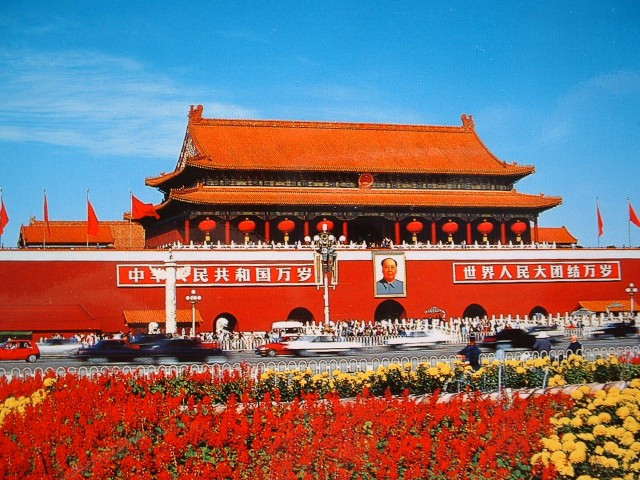
中国的人权在改善,但与王毅提出的相反,它不一定是中国政府的功绩,而更是来自于自己人民所提倡的公民参与。中国政府文革后正式结束“孤立主义的做法”,对西方打开大门。数百万中国人因为邓小平的激烈并积极的“开放”政策在国外旅游、学习。其“意外”的效果是人们目睹了民主治理和公民抗议的模式。从那时起,他们便带着这些“宝贵的学习经验”一起返回中国。
Despite the global interest in the rise of China and its terrible human rights record, no one is paying much attention to China's de facto opposition: the Public Intelligentsia. China has a surprisingly lively intellectual class whose ideas may prove a serious challenge to the ruling Communist party. The Public Intelligentsia is made up of people from all walks of life: professors, teachers, economists, lawyers, TV personalities and so on.
中国的崛起及其糟糕的人权记录吸引着全球的兴趣,却没有人注意到中国实际上的反对派:公共知识分子。中国有着惊人活跃的知识阶层,他们的思想可以对执政的共产党构成严峻挑战。公共知识分子是由来自各行各业的人组成:教授,教师,经济学家,律师,电视人物等。
Paradoxically, the power of the Chinese Public Intelligentsia is amplified by China’s repressive political system, where there are no opposition parties, no independent trade unions, no public disagreements between politicians, and a media that exists to underpin social control rather than promote political accountability. Intellectual debate in that world can become a surrogate for politics. On a daily basis, the Chinese Intellectual goes on to Weibo (Chinese version of Twitter) to openly discuss the concepts of civic discourse, accountability, democracy and free elections.
矛盾的是,中国公共知识分子的力量却因中国压制性的政治体制而放大,这一体制中没有反对党,没有独立工会,政客之间没有公开的分歧,媒体的存在旨在加强社会控制而不是促进政治问责。在这个体制中,知识分子辩论成为政治的替代品。在日常情况下,中国知识分子在微博(中国版Twitter)上公开讨论公民话语、问责制、民主和自由选举的概念。
Just 3 weeks ago, about 80 people attended a town hall meeting in Shanghai Library. Among them were college professors, lawyers, working moms, teachers and white collar professionals. They were there to discuss the need for constitutional reform and democratic transformation. Following the passing of Lei Yang, an Environmentalist who died after an altercation with the Beijing police, the public demanded a reinvestigation of this case because it appeared that Lei Yang was framed by the police. Talk show hosts, writers, fashion bloggers and gay rights activists formed an unusual alliance. They mobilized and organized the movement “We Must Speak Out” where thousands of people signed the petition to demand an independent third party inquiry. They also successfully swayed public opinion in favour of opposition to police brutality and its abuse of power. Southern Weekly, which is dubbed as China’s most influential liberal newspaper by The New York Times, often runs into trouble when its editorial board openly rejects the Communist party’s propaganda. LIBRAIRIE AVANT-GARDE, voted by CNN as the most beautiful bookstores in China, frequently holds free lectures for citizens on Civil Rights, Workers' Rights, Climate Change and Pay Equity. Two weeks ago, in the city of Nanjing, thousands of parents demonstrated outside of the provincial Ministry of Education peacefully, demanding the Ministry reverse its decision to remove 40,000 university admission spaces without consulting the parents first. Yet we rarely hear these stories being covered in our mainstream media.
就在3个星期前,约80人参加了在上海图书馆的市政厅会议。其中有大学教授,律师,工作的妈妈,教师和白领专业人士。他们在那里讨论宪法改革和民主转型的需要。环保人士雷洋在与北京警方发生口角后死亡,公众要求重新调查这一案件,因为他似乎被警方陷害。谈话节目主持人,作家,时尚博主和同性恋权利活动家形成了一个不寻常的联盟,他们动员和组织了“我们必须大声疾呼”的活动,数千人签署了请愿书,要求一个独立的第三方调查。他们还成功地促成了反对警察暴力和滥用权力的公众舆论。“南方周末”,这是被纽约时报称为中国最有影响力的自由派报纸,常常因其编委公开拒绝共产党的宣传遇到麻烦。 南京的先锋书店,由CNN评选的中国最美丽的书店,经常举办免费的关于公民权利,劳工权利,气候变化及薪酬平等的讲座。两个星期前,在南京市,成千上万的家长在教育厅外和平示威,要求该厅撤销其未经咨询而取消40000大学录取名额的决定。然而,我们却很少在我们的主流媒体听到这些故事。
The point of pressing China for Human Rights reform at every opportunity is not just to embarrass China. Rather the goal is to remind China, over and over, that human rights is a universal value which China must recognize if it wants to be a player on the world stage. Instead of covering the same old mundane stories 1,000 times, we must also start covering the real improvements in China, not to please or kowtow to the Chinese government, but rather to empower the people of China, and let them know that through strong advocacy and engagement, change can and will happen. We have to recognize that as a rising super power, China does not always have to do what Canada wants it to do. Our press has to stop getting into the habit of being self -indulgent or exhibiting a moral superiority complex. We must stand with the people of China. We have a moral obligation to help them transition from "people” to “citizens", as Southern Weekly, China's most influential liberal newspaper put it, "we are not Spartan slaves, we are the citizens of Athens". We have to highlight the numerous examples of success stories of their hard fought battles. We need to correct our own myopia when it comes to China. It is time to take off our rose-coloured glasses and to view the problem through the prism of reality.
严格检验中国的人权问题的重点不仅仅是让中国难堪。更是要一遍又一遍地提醒中国,人权是普世价值,如果中国希望登上世界舞台,就必须承认这一点。 除了千篇一律的重复那些老故事,我们还必须开始报导真正的改善。这不是为了取悦中国政府或向其屈膝,而是要赋予中国人民力量并让他们知道,通过强有力的拥护和参与,改变能够并且将会发生。我们必须认识到,作为一个崛起的超级大国,中国并不总是要做加拿大希望它做的事。我们的记者必须停止那些自恋或表现出道德优越感的习惯,我们必须站在中国人民一边。我们有道义上的责任,帮助他们从“人民”转变为“公民”。正如“南方周末”,中国最具影响力的自由派报纸所说, “我们不是斯巴达的奴隶,我们是雅典的公民”。我们要突出诸多通过艰苦斗争取得胜利的故事,我们需要纠正涉及到中国时的近视。是时候摘下我们的有色眼镜,通过现实的棱镜来审视问题了。

还没有评论
,点击发布!








网友评论